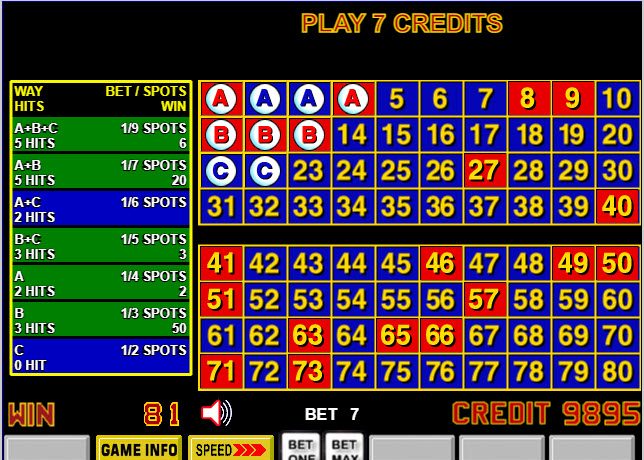
Players frequently search for patterns, believing certain number combinations hit more often than random selections. Pattern recognition represents a natural human tendency to seek order in randomness. https://crypto.games/keno/ethereum generate purely random outcomes, making patterns mathematically meaningless. Understanding pattern psychology versus statistical reality helps players maintain realistic expectations.
Sequential selection appeal
Many players favour choosing consecutive numbers like 5, 6, 7, 8, 9, believing clusters appear together frequently. Visual proximity on keno boards creates perceived relationships between adjacent numbers. Sequential patterns feel organized and deliberate compared to scattered random selections. Players report psychological comfort from ordered systematic approaches versus chaotic randomness.
Mathematical equivalence reality
Consecutive sequences possess identical probability as any other combination despite appearing more organized. Draw mechanisms treat all numbers equally without favouring proximity relationships. Blockchain transparency lets players verify consecutive numbers hit no more frequently than scattered selections over thousands of games. Statistical analysis confirms that pattern beliefs lack a mathematical foundation.
Hot and cold number tracking
Players analyze historical draw data identifying frequently appearing “hot” numbers and overdue “cold” numbers. Hot number theory suggests momentum continues with popular numbers hitting repeatedly. Cold number theory expects regression to the mean, with overdue numbers appearing soon. Both approaches suffer from the gambler’s fallacy since each draw remains statistically independent from previous results. Blockchain platforms provide complete historical data, enabling pattern tracking, though predictions remain mathematically invalid.
Geometric pattern formations
Some players select numbers forming visual shapes on keno boards like diagonals, squares, or crosses. Geometric patterns create aesthetic appeal and perceived strategic structure. Diamond formations, L-shapes, and signs represent popular geometric selection methods. Players report enhanced engagement through pattern-based selection versus random choices. However, visual arrangements don’t affect underlying probabilities since draw mechanisms ignore board positions.
Spread distribution strategies
Distributing selections evenly across the entire number field rather than clustering in small areas appeals to coverage-seeking players:
- Balanced coverage approach – Choosing numbers from different decades, like 3, 15, 22, 31, 38, covers more grid territory
- Avoiding concentration risk – Spread selections minimise overlap if drawn numbers cluster in specific field regions
- Perceived diversification value – Wide distribution feels strategically sound, though probability remains unchanged
- Actual effectiveness assessment – Mathematical analysis confirms spread selections offer no advantage over clustered picks
Distribution methods satisfy psychological preferences without improving mathematical outcomes.
Birthday and anniversary systems
Personal significance drives selections based on meaningful dates like birthdays or anniversaries. Numbers one through thirty-one appear frequently in date-based patterns. Lucky number systems provide an emotional connection, making gameplay more personally engaging. Psychological investment increases entertainment value even without improving win probability. Superstitious thinking persists despite mathematical knowledge that personal significance doesn’t affect randomness.
Repeating number persistence
Some players choose identical selections every game, believing persistence eventually succeeds. The repetition strategy assumes selected combinations must eventually hit, given sufficient trials. Mathematics confirms this intuition since infinite trials guarantee all combinations occurring eventually. However, required timeframes often exceed practical gambling horizons, making persistence a questionable strategy. Consistent selections simplify gameplay, avoiding decision fatigue from constant number choosing.
Ethereum keno number patterns include consecutive sequences, hot-cold tracking, geometric formations, spread distribution, personal significance systems, and repeating persistence. No pattern approach changes underlying probabilities since all combinations face identical mathematical odds. Pattern selection affects psychological experience and entertainment value without providing statistical advantages. Understanding this reality helps players choose enjoyable approaches without false expectations about improved winning chances.